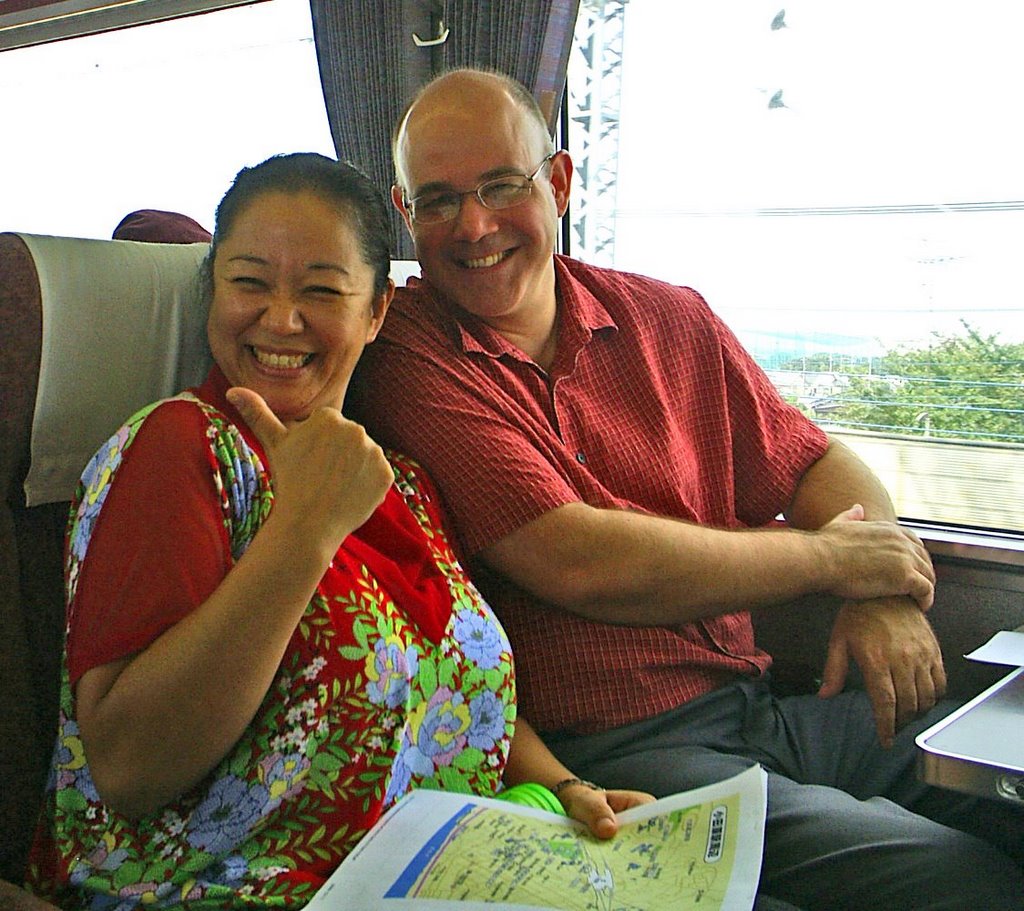
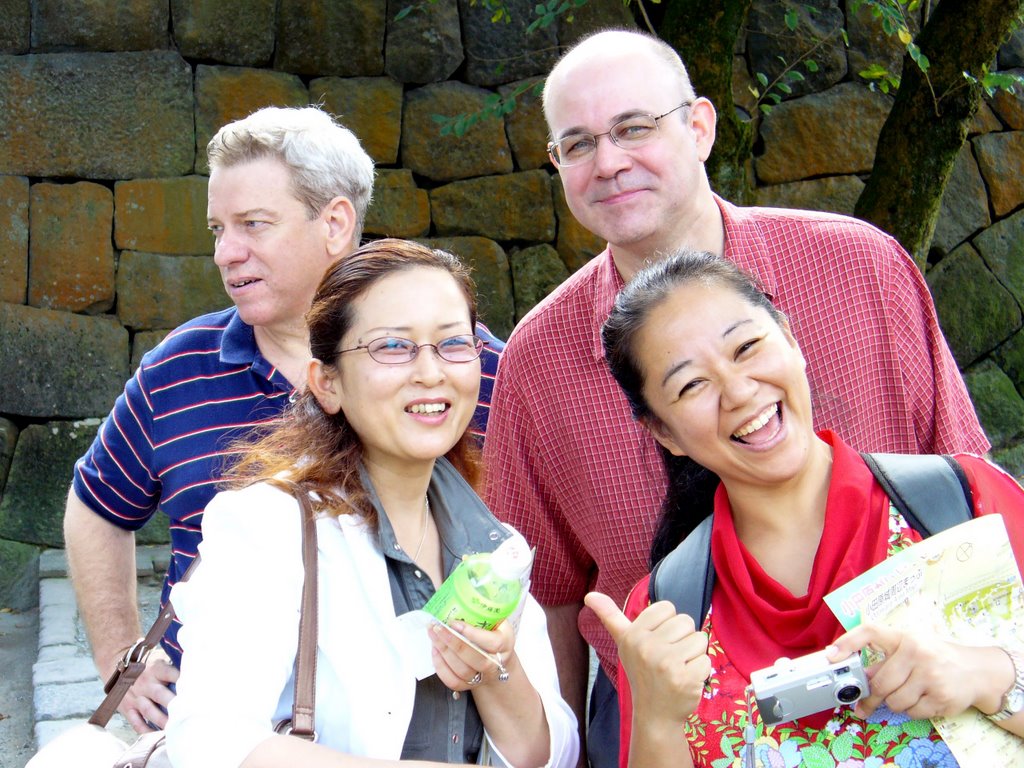
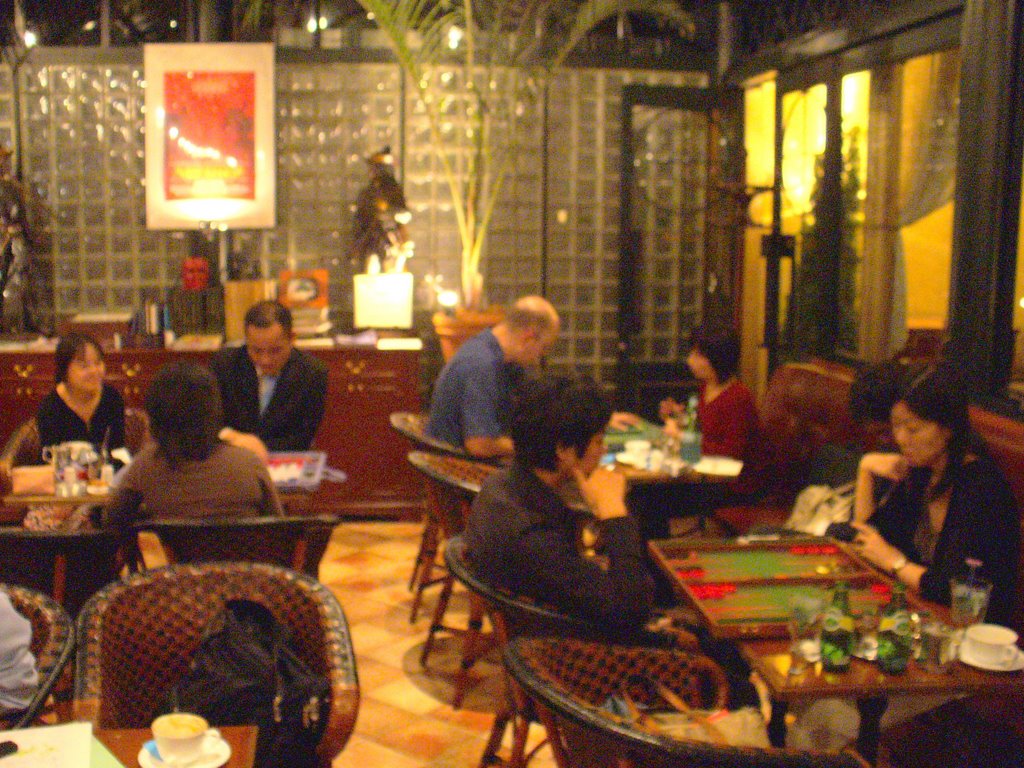
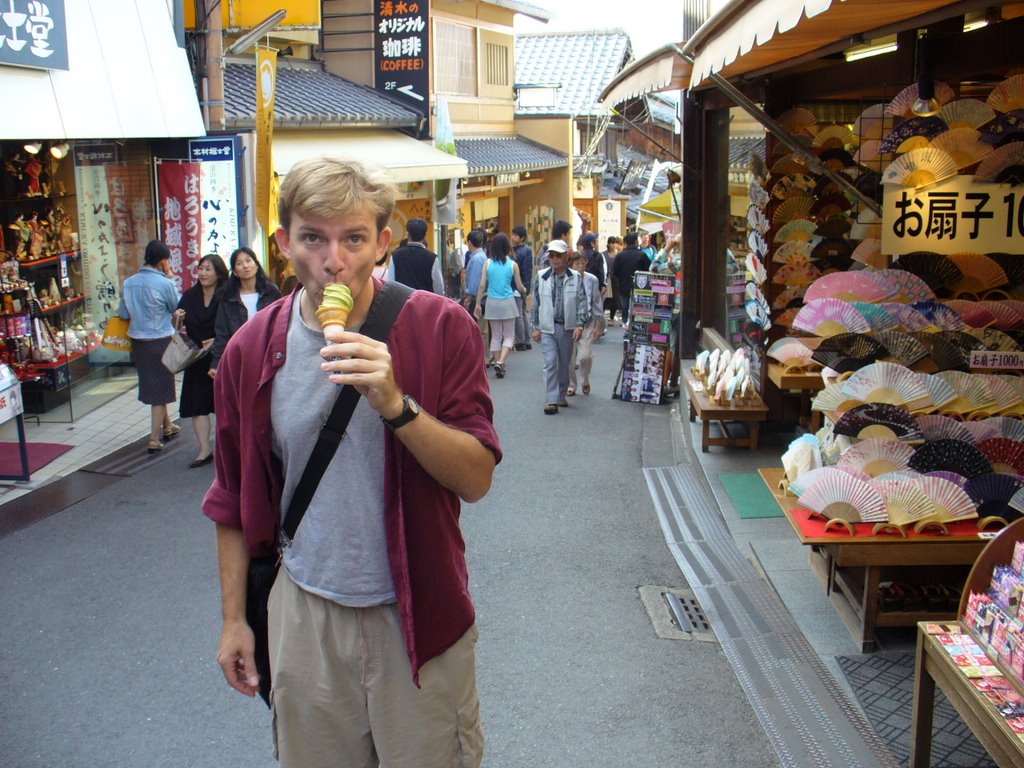
We met at noon outside the famous Almond Cafe in Roppongi. They took me to a noodle bar for lunch (where they explained that it is not considered impolite to slurp when eating noodles). We talked a little about cultural differences (they had both been to Las Vegas and Monte Carlo for backgammon). What did they find most surprising about the US? No hesitation -- that people are so fat. I laughed and agreed, but did suggest that Vegas might not be fully representative. It is, after all, a playground for people with no self-control. This made them laugh. I asked if they ever thought about weight or diet or exercise for themselves and they looked confused and said no (both are abnormally, alarmingly thin). They just stay thin. Mochy described going to a MacDonald's in Vegas, and thinking he had received the wrong order because there was so much food on his plate. Apparently the McPortions in Tokyo are about 1/3 of those in the states.
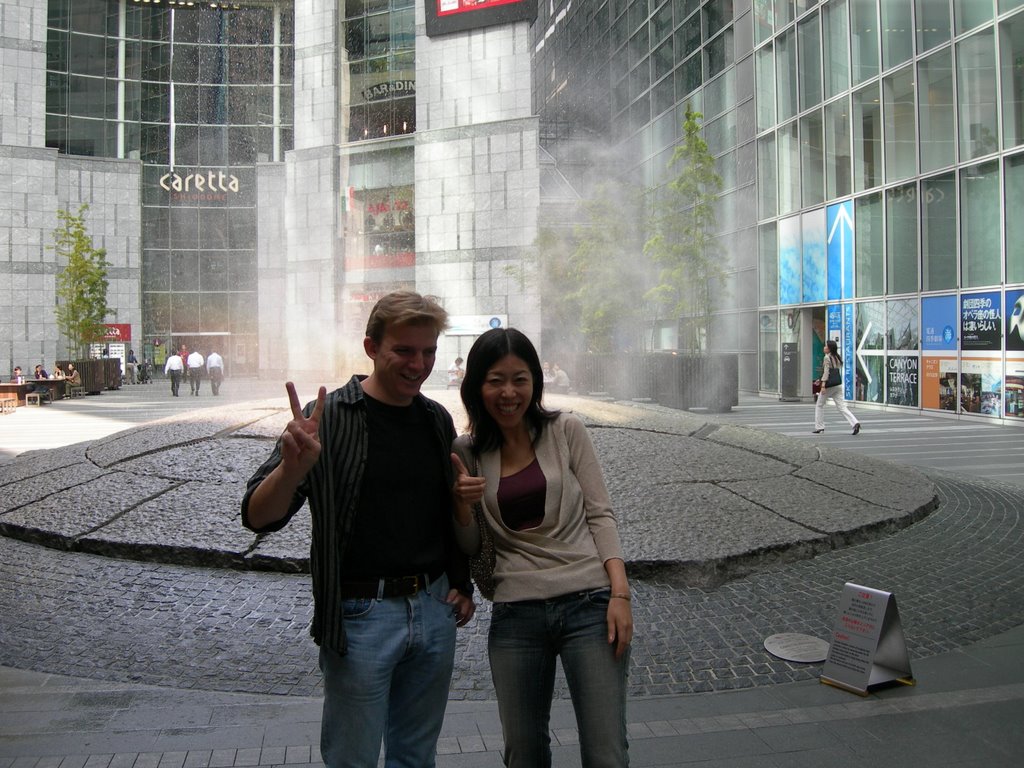
Then we took the subway to a park. At the subway exit was an indoor rock-formation sculpture that erupts with steaming water every hour.
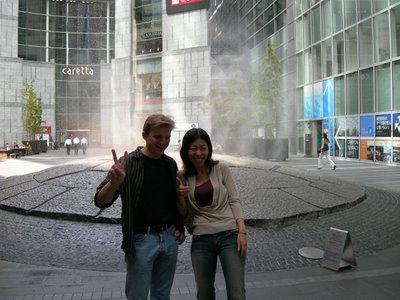
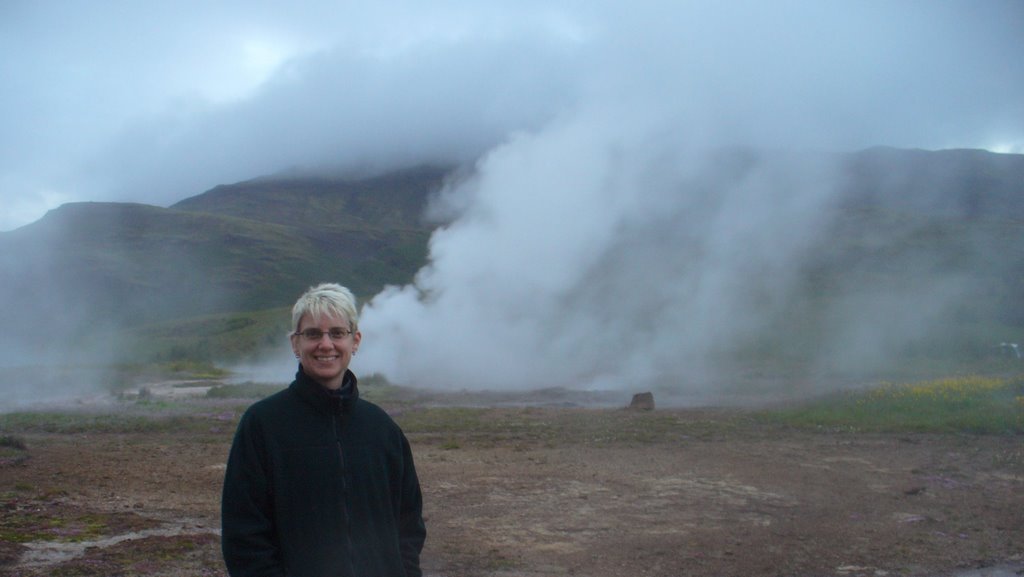
I explained that just a few weeks ago I had taken photos of
Geysir in Iceland.

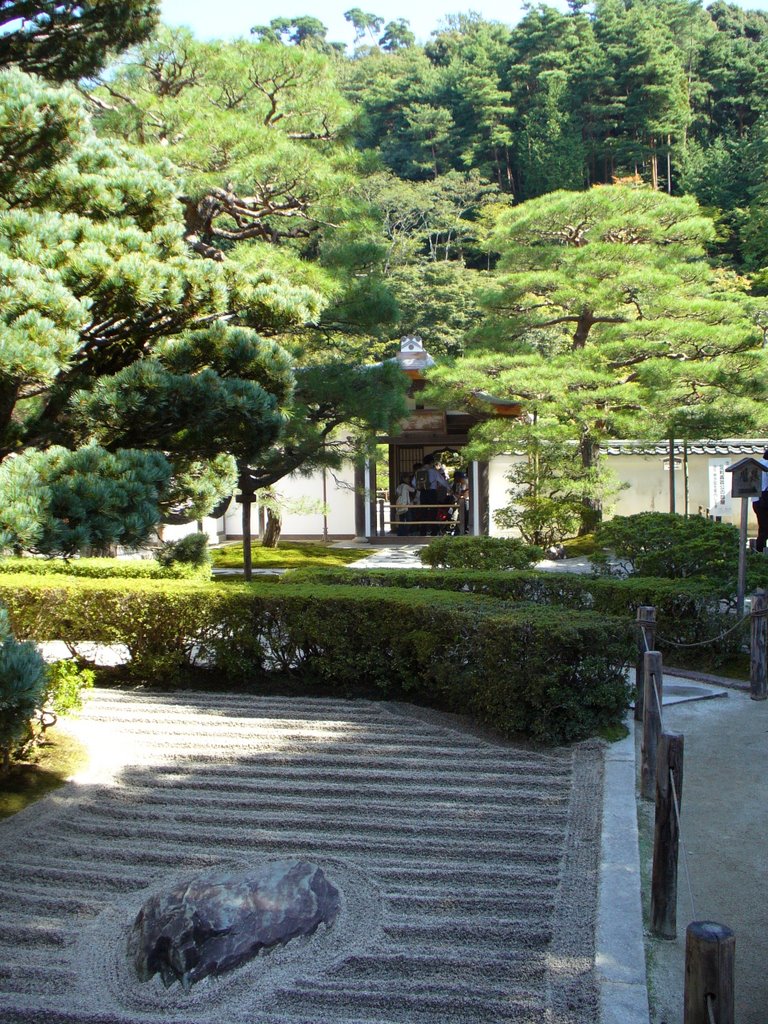
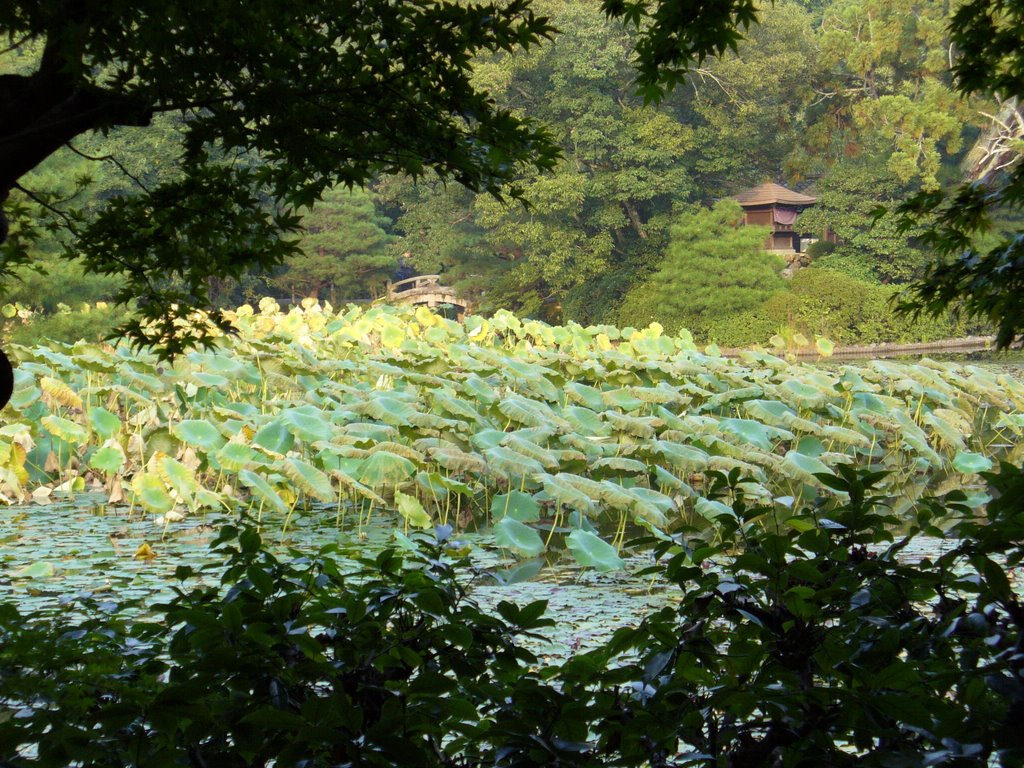
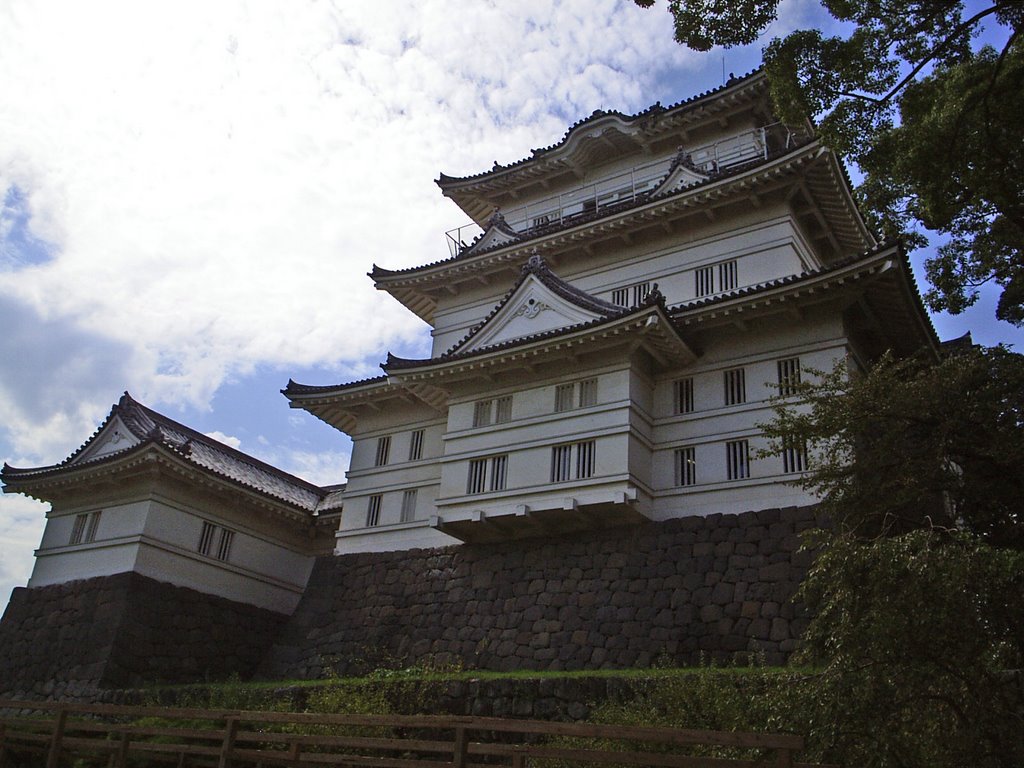
We went to a park which was "very traditional and old Japanese", but was not so impressive to my untrained eyes. In the middle, however, was a "very traditional and old Japanese tea-house" where we took off our shoes and sat uncomfortably on tatami mats and drank green tea. It was fun and interesting. (And uncomfortable.) Mochy noticed an older woman who was sitting perfectly and who turned her tea-bowl around three times in her hands before drinking. He said she had perfect form and must have been taught by her mother or grandmother.
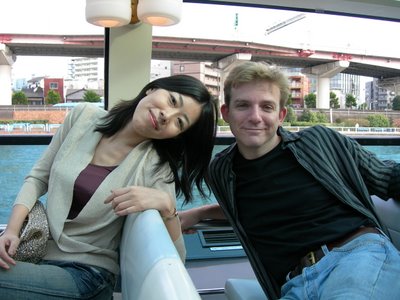
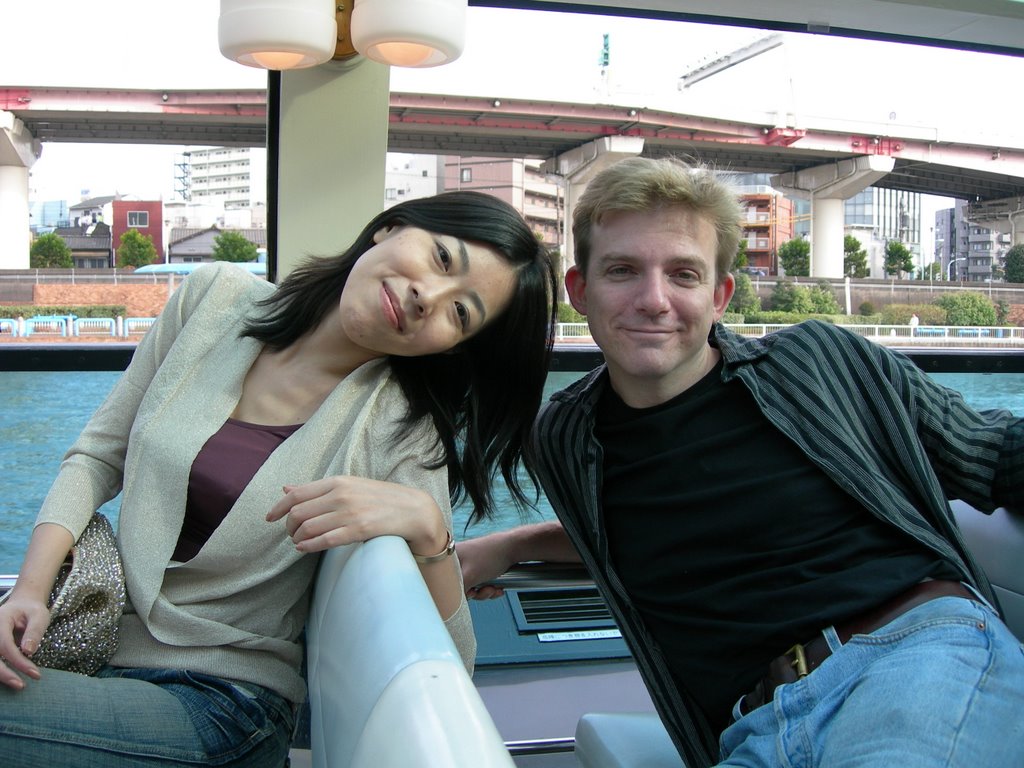
Then we took a water-taxi, which is always nice, to go see Senso-ji Temple in Asakusa. I asked several times if this was a working temple which people actually attend, or more of a tourist attraction. A working temple, they said, but seemed confused and I wasn't sure we understood each other.
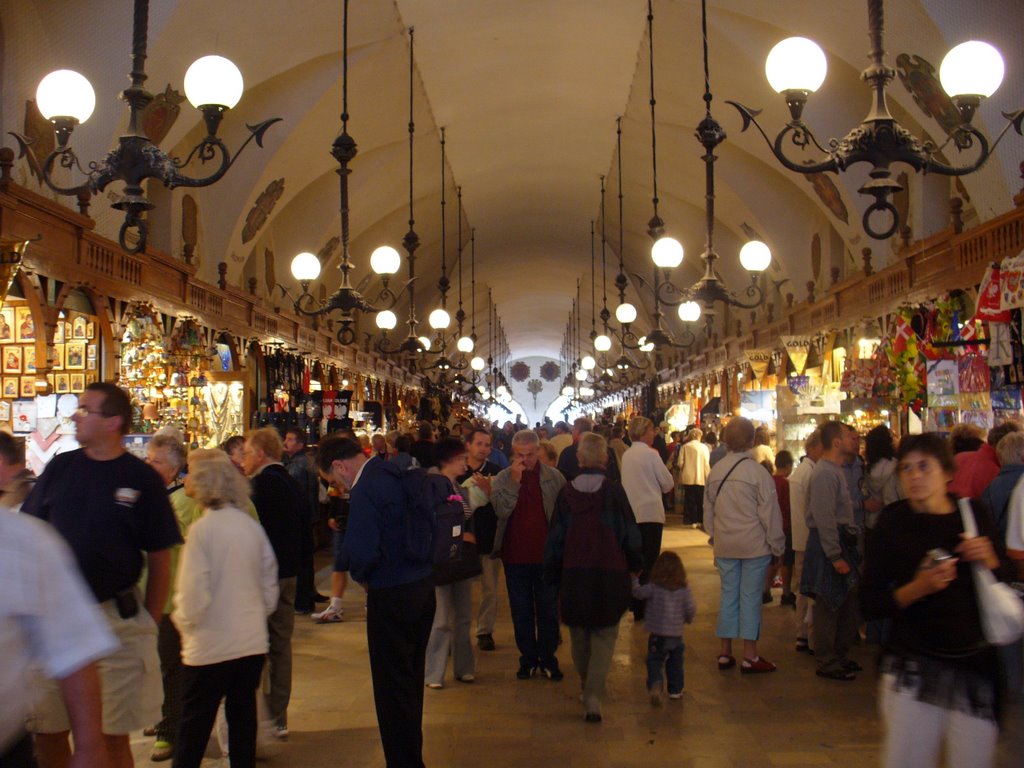
The temple had a long marketplace in front, very reminiscent of the place in Krakow, Poland where we bought sweaters and rugs.

Then we got to the temple and it was big and interesting. One large building and several small ones around a city block or so. Looking very much like what you'd expect from a martial-arts movie. First, there was the famous giant paper lantern.

Big cauldrons of incense outside the buildings. People would come up and wave the smoke in their faces. What was that about, I asked? Healing forces. You wave the smoke onto the body part that needs help. If nothing is particularly broken, you wave it onto your head. Many people were doing this.
So I asked if either of them were particularly religious or had any mystical beliefs. They laughed. Yuriko said no, she had no religion, then laughed more and looked embarrassed. I asked why, and she said that must sound strange to me, because everyone in the US is so religious. Sigh. So we talked about that.
Then we went into the main temple and encountered what I would call a giant wishing well. People would throw change into the water and then pray. So imagine my surprise considering our very last conversation when Mochy and Yuriko both threw change into the water and bowed heads and prayed in silence for nearly a minute. Ok, this is interesting, I thought. So a few minutes later I asked. Well, they said, yes it might seem odd. Mochy said he does not pray to "God". Bu his grandfather died recently and he likes to pray for his well-being. He knows he is dead and gone, but he likes to pray for him. I nodded. I should explore this further at some point.
Then we came to a big table with many boxes, like an old fashioned card catalogue in a library, and with wood spools resting on the table. First I had to pay 100 yen (a little less than a dollar.) I was instructed to pick up a spool and shake it, then turn it upside down and let a stick fall out of a small hole. I thought I could keep the stick but no, they just read the number off the sick and returned it to the spool. Then they found the box with the number from the stick. We opened the box and pulled out a piece of paper with much text on it (an English translation on the back). Aha -- it was a horoscope. Or, more accurately, a pay-per-read I Ching. It turns out the fortune I picked was a very, very, good one, and I should be happy and save it. Ok. Then they did the same, but theirs were not as good. Later we came to a stand with wires stretched across it, and many small papers tied to the wired. Mochy and Yuriko took their fortunes and rolled them up and tied them to a wire. I was doing the same when they started laughing and told me no, mine was a good fortune so I should keep it.
A very fun trip, and nice to see something different from the bustle of modern Tokyo.